Forbidden City Guide 2026: Tickets, Map & What to See Inside
🏯 The Forbidden City
The Forbidden City (故宫, Gùgōng) is the largest imperial palace complex in the world. Built between 1406 and 1420 under the Ming dynasty, it served as the home of Chinese emperors and the center of Chinese political power for nearly 500 years. Today it's a museum housing 1.8 million artifacts and receives 80,000+ visitors on peak days.
Walking through the Forbidden City is walking through 600 years of Chinese history. The scale is staggering — 980 buildings, 72 hectares (180 acres), and enough courtyard to hold 11 football fields. You need at least half a day. Rushing it would be a mistake.
Essential Info
| Detail | Info |
|---|---|
| Address | 4 Jingshan Qianjie, Dongcheng District |
| Opening hours | 8:30 AM – 5:00 PM (last entry 4:10 PM); Closed Mondays |
| Ticket price | ¥60 (high season Apr–Oct), ¥40 (low season); ¥80 with Treasure Gallery |
| Booking | Book online via WeChat mini-program or 官网 (gugong228.com.cn); book 5–10 days ahead |
| Time needed | 3–5 hours minimum; half a day is ideal |
| Metro | Line 1 to Tiananmen West or Tiananmen East |
History
The Forbidden City was built by 100,000 workers over 14 years under the Yongle Emperor, the third Ming emperor who moved the capital from Nanjing to Beijing. The name "Forbidden City" (紫禁城, Zǐjinchéng) came from its exclusivity — commoners were prohibited from entering without imperial permission.
It was home to 24 emperors across the Ming and Qing dynasties:
- Ming dynasty: 14 emperors, 1402–1644
- Qing dynasty: 10 emperors, 1644–1912
After the last emperor Puyi was expelled in 1925, the complex became a public museum. In 2008, the Qing government completed renovations on the northern half, which had been closed to the public for decades.
Layout
The palace is divided into two parts:
The Outer Court (外朝)
The ceremonial and political center:
- Meridian Gate (午门, Wǔmén) — the main southern entrance. The central gate was reserved exclusively for the emperor.
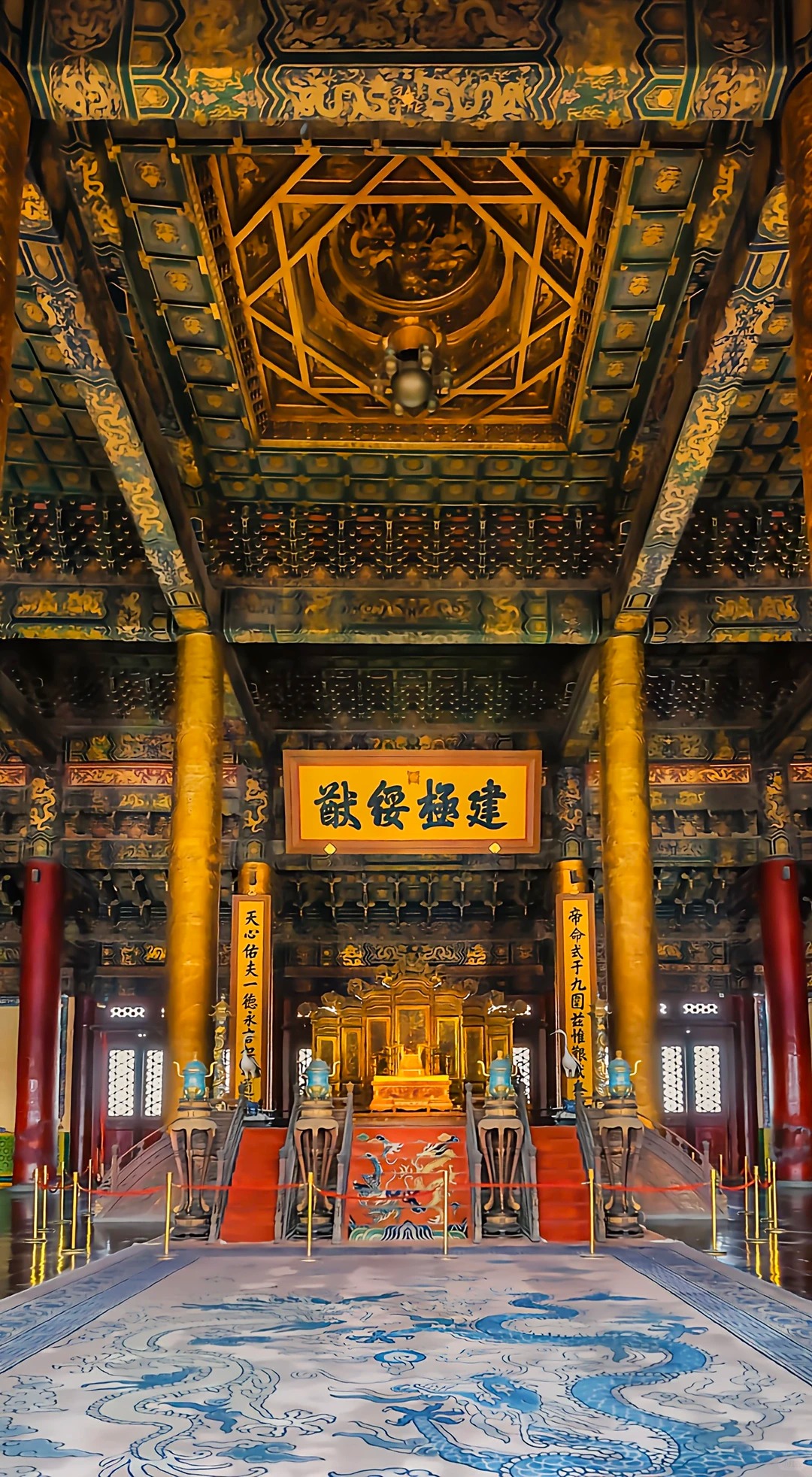
- Hall of Supreme Harmony (太和殿, Tàihédiàn) — the largest building, where coronations and major ceremonies took place
- Hall of Central Harmony (中和殿, Zhōnghédiàn) — the emperor's warm-up room before ceremonies
- Hall of Preserved Harmony (保和殿, Bǎohédiàn) — used for imperial examinations
The Inner Court (内朝)
The imperial family's private quarters:
- Palace of Heavenly Purity (乾清宫, Qiánqīnggōng) — the emperor's residence and workspace
- Hall of Union (交泰殿, Jiāotàidiàn) — storage of imperial seals
- Palace of Earthly Tranquility (坤宁宫, Kūnnínggōng) — the empress's residence
- Imperial Garden — a beautiful traditional garden at the northern end
How to Plan Your Visit
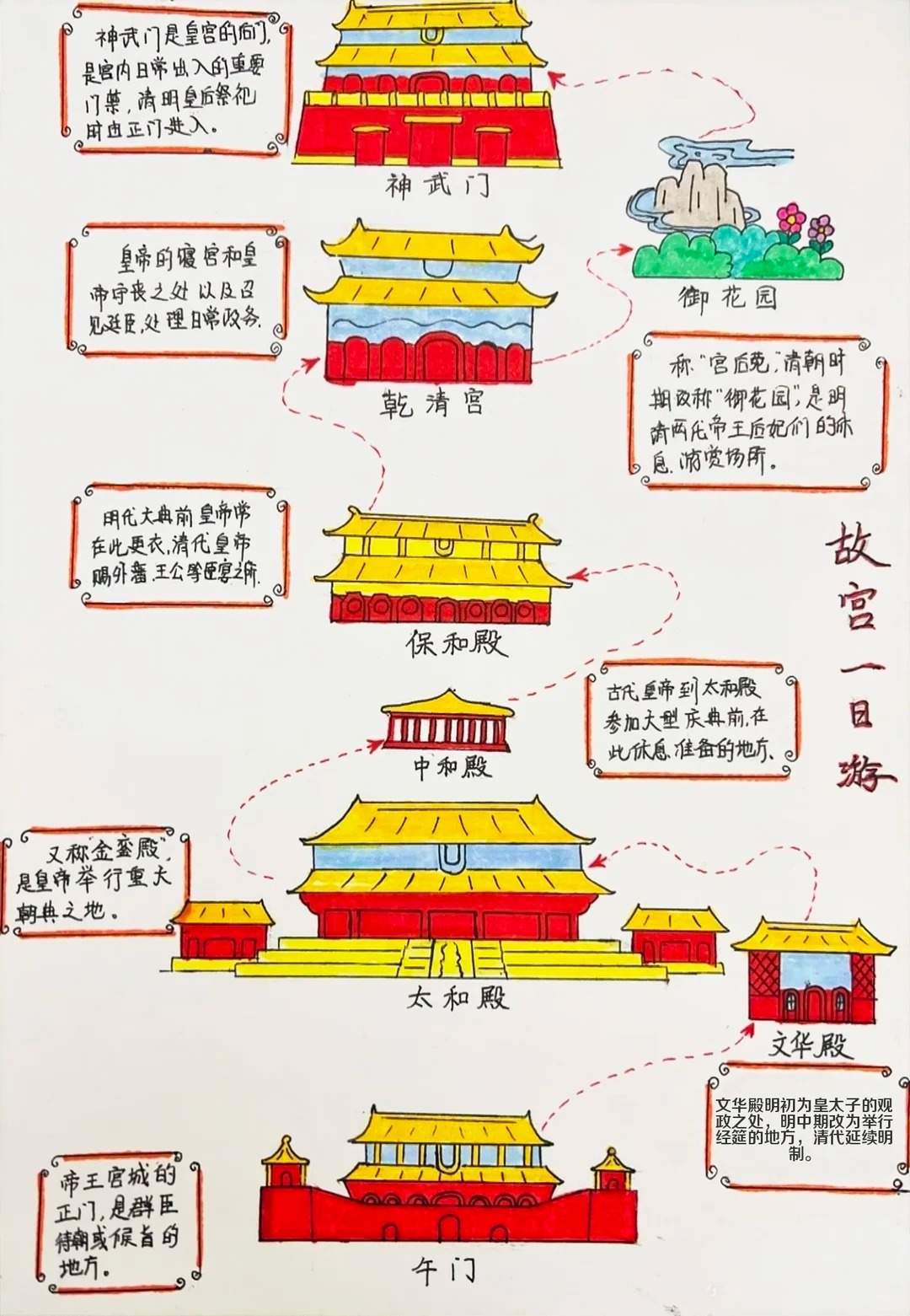
Route recommendation:
- Enter through the Meridian Gate
- Walk north through the Outer Court to the Hall of Supreme Harmony
- Continue to the Gate of Heavenly Purity
- Enter the Inner Court
- End at the Imperial Garden and exit through the Gate of Divine Might (神武门)
Clockwise vs counterclockwise: Most visitors go clockwise (right). If you go counterclockwise (left), you'll encounter fewer crowds at the start.
Important: You can only walk clockwise through the outer courtyard — the paths are one-way.
Tickets & Booking
⚠️ Important: The Forbidden City is the most-visited museum in the world. Tickets sell out fast — especially on weekends and holidays. Book online at least 5 days in advance.
How to book:
- WeChat mini-program: search 故宫 (gùgōng)
- Official website: gugong228.com.cn
- Third-party: Trip.com, Klook
Booking tips:
- Morning slots (8:30–10 AM) are the most popular — book the earliest you can
- Afternoon slots (1–2 PM) are less crowded
- The Treasure Gallery (珍宝馆) and Clock Tower (钟表馆) require an additional ¥20 ticket each
- Arrive 30 minutes before your slot — security lines can be long
Photography Tips
Best locations:
- Meridian Gate from the outside (moat side) — the classic shot
- Hall of Supreme Harmony from the central courtyard — the iconic view
- From Jingshan Park (景山公园) directly north — the ONLY place to get the aerial view of the entire complex
- North side near Gate of Divine Might — dramatically fewer tourists
Best times:
- Opening (8:30 AM) — the 15 minutes after gates open are magical
- Last hour before closing — the light is beautiful and crowds thin out
- Bad weather days — moody shots, fewer people
What to See Inside
Don't miss:
- The bronze statues in the Hall of Supreme Harmony — the largest bronze objects in the palace
- The dragon throne in the Hall of Heavenly Purity — the actual seat of imperial power
- The 1.8 million artifact collection — rotated displays throughout the buildings
- The Qianlong Emperor's Clock Gallery — extraordinary mechanical timepieces from the 18th century
- The Imperial Garden — at the northern end, a hidden gem most tourists skip
Getting There
- Metro Line 1 to Tiananmen West or Tiananmen East — then walk north through Tiananmen Square, past Mao's portrait, and through the Meridian Gate
- Didi — set destination to "故宫博物院" (Gùgōng Bówùyuàn)
- Bus 1, 2, 52, 82 to Tiananmen West
⚠️ Allow 30–60 minutes to pass through security at Tiananmen Square before entering the palace.
FAQ
Is the Forbidden City worth visiting? Absolutely. It's the largest and most complete imperial palace in the world. Allow at least 3 hours — rushing is the biggest mistake tourists make.
Do I need to book tickets in advance? Yes — almost always. Tickets sell out 5–10 days ahead for peak season (April–October) and weekends. Book online before your trip. No walk-in tickets during peak periods.
Is one day enough for the Forbidden City and the Palace Museum? The complex itself is one site. The "Palace Museum" (博物院) is the museum inside the Forbidden City. Allow 3–5 hours. Combine with Jingshan Park (right across the street) for the panoramic view.
What should I wear? Comfortable walking shoes — you'll walk 3–5 km inside. In summer, bring sunscreen and water. In winter, layer up — it's windy and cold inside.
Can I see the Imperial Garden? Yes, it's at the northern end. Most tourists skip it, but it's actually beautiful — a traditional Chinese garden with pavilions, rock gardens, and ancient cypress trees.
Cost Summary
| Item | Cost |
|---|---|
| Ticket (high season) | ¥60 |
| Ticket (low season) | ¥40 |
| Treasure Gallery (optional) | ¥20 |
| Clock Tower (optional) | ¥20 |
| Jingshan Park | ¥2 |
| Audio guide (optional) | ¥40 |
| Total | ¥60–100 |
Last updated: 2026-06-05 · Written by Bobby, living in Chengdu since 2023